 Fulfilling Electoral Promises Movement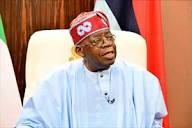
BOLA TINUBU
President - Candidate · 2027
Lagos, NA
Public Life
CAMPAIGN PROMISES FOR LAGOS STATE GOVERNORSHIP ELECTION IN 1999
POLITICAL PARTY: ALLIANCE FOR DEMOCRACY (AD)
Ahmed Tinubu’s 1999 campaign for the governorship of Lagos State, run under the Alliance for Democracy (AD) party with the slogan "The Credible Choice," focused on rebuilding infrastructure, improving social services, and ensuring the economic revival of the state. His platform, often referred to as the "Renewed Hope" vision (a precursor to his 2023 national agenda), promised to transform Lagos from a state of decline into a modern, functional, and self-sufficient state.
Olakunle David Olaniran Abiodun
·23 September 2022 ·
10 THINGS TO KNOW ABOUT BOLA TINUBU ACHIEVEMENTS IN LAGOS AS GOVERNOR
- Tinubu instituted a reform plan that greatly improved the welfare of judicial officers including magistrates
- He revamped the civil and criminal procedure rule as well as creation of the Citizens Mediation Centre; a well-staffed and independent Office of the Public Defender, offering legal services for the poor.
- He established additional 5 general hospitals in Lagos state
- He upgraded facilities at the Lagos State Teaching Hospital (LASUTH)
- He provided free healthcare services including free ante-natal care for women, free eye treatments and free glasses, popularly called 'JIGI BOLA'.
- He pioneered the Bus Rapid Transit System and LAGBUS
- He established the Lagos State Traffic Management Authority (LASTMA)
- Reference of at least 13 matters related to the principle of federalism to be tested by the Supreme Court
- Tinubu created 37 Local Council Development Areas
- He spear-headed the political merger that produced president Buhari.
SOURCE:https://web.facebook.com/groups/1491189601025934/posts/2756384754506406/?_rdc=1&_rdr#
BOLA AHMED TINUBU'S ACHIEVEMENTS AS LAGOS STATE GOVERNOR (1999–2007): A COMPREHENSIVE AND CHRONOLOGICAL OVERVIEW
1. FIRST TERM (1999–2003): FOUNDATIONS AND REFORMS
- i .Traffic Management (2000): Established the Lagos State Traffic Management Authority (LASTMA) to address chronic traffic congestion and improve road safety.
- ii.Waste Management (2000): Restructured the Lagos Waste Management Authority (LAWMA), introducing Public Sector Participation (PSP) operators to enhance efficiency and cleanliness.
- Revenue Reform (2001): Overhauled the Lagos State Internal Revenue Service (LIRS), boosting internally generated revenue (IGR) from ₦600 million/month to over ₦8 billion/month by 2007.
- Security Enhancement (2000): Created the Rapid Response Squad (RRS) to combat armed robbery and violent crime, supported by community policing initiatives.
- Healthcare Upgrades (2001): Upgraded the Lagos State University Teaching Hospital (LASUTH) and established the Lagos State Ambulance Service (LASAMBUS) for emergency response.
- Education Expansion (1999): Founded the **Lagos State University College of Medicine (LASUCOM) and renovated over 100 schools, improving access to quality education.
- Infrastructure Development: Initiated key road projects, including the Ojodu-Berger Road expansion and early planning for the Lekki-Epe Expressway.
- Women Empowerment: Launched microcredit programs through the Lagos State Women Development Fund to support female entrepreneurs.
2. SECOND TERM (2003–2007): EXPANSION AND LEGACY PROJECTS
- Administrative Reforms (2003): Created 37 Local Council Development Areas (LCDAs) to decentralize governance, leading to a legal battle with the federal government over withheld funds (resolved partially by 2005).
- Transportation Vision (2003): Established the Lagos Metropolitan Area Transport Authority (LAMATA), laying groundwork for the Lagos Rail Mass Transit (Blue Line) and Bus Rapid Transit (BRT) systems.
- Public-Private Partnerships (2006): Concessioned the Lekki-Epe Expressway under a PPP model and initiated the Lekki Free Trade Zone to attract investment.
- Security Funding (2007): Launched the Lagos State Security Trust Fund (LSSTF) to mobilize private sector resources for security infrastructure.
- Housing Projects: Developed estates like Iponri and Igbogbo, addressing urban housing shortages.
- Environmental Management: Executed drainage projects (e.g., Oshodi-Abule Egba Channel) to mitigate flooding and partnered with private firms for waste collection.
- Judicial Reforms: Strengthened the judiciary by establishing new courts and improving facilities for efficiency.
- Economic Growth: Increased Lagos’ GDP share from 25% to 30% of Nigeria’s total, driven by infrastructure investments and PPP models.
3. CROSS-TERM ACHIEVEMENTS (1999–2007):
- Educational Programs: Introduced scholarships and the Eko Project to uplift underserved communities.
- Healthcare Access: Built primary healthcare centers statewide, focusing on maternal and child health.
- Legal Autonomy: Successfully challenged federal withholding of local government funds, securing partial refunds and reinforcing state fiscal rights.
Legacy: Tinubu’s tenure transformed Lagos into a model of urban governance, emphasizing revenue autonomy, infrastructure modernization, and public-private collaboration. His reforms laid the foundation for Lagos’ emergence as a megacity and economic hub.
Source: https://web.facebook.com/straightfromnaija/posts/bola-ahmed-tinubus-achievements-as-lagos-state-governor-19992007-a-comprehensive/1300177778784608/?_rdc=1&_rdr#
SOME OF ASIWAJU BOLA AHMED TINUBU's ACHIEVEMENTS AS LAGOS STATE GOVERNOR.
- POWER: Tinubu’s govt, in 2000, contracted AES to build an IPP that will generate 270MW of electricity to Lagos residents in order to exit the irrational power supply being provided by the FG.
- The 270MW is now part of our national grid. First of its Kind.
- DECENTRALIZATION: In order to bring governance closer to the people of Lagos state, Asiwaju created extra 36 LCDAs which led to the disagreement between Lagos and the Obasanjo led FG. They are still working till date. Nigeria needs someone who believes in this!
First of it’s kind.
- ECONOMY: With an IGR of just over 600million naira when he took over, different initiatives which included the reorganization of the LIRS led to an unprecedented IGR of over 7billion Naira monthly after 8 years, the sustainability of which has brought same to 57bn Naira in 2022.
- 4 HEALTH: Decentralization of the Health Management Board led to the creation of LASAMBUS, an ambulance management scheme, Hospital Services Commission and Lagos State Health Facility Monitoring and Accreditation Agency.
- INFRASTRUCTURE: Roads, Railway Roadmaps, Port Roadmaps, Housing Roadmaps. Hospital Roadmaps.
- INVESTMENT: Lekki Free Trade Zone opened Lagos to investors and now several top companies/bodies have their headquarters there including the biggest consulate office of the USA.
- HOUSING: Decentralization of the Ministry of Works and Housing gave birth to the conversion of the housing department to a full fledge ministry which was charged with providing 500 units of houses yearly. This single move led to making the Lekki corridor the fastest growing real estate investment haven in Nigeria.
- Housing sector was opened to the private investors and Lagos became the highest destination for real estate investors in Nigeria.
- EDUCATION: Payment of WAEC fee for students from all walks of life so far you live in Lagos. Several schools were built. The One-Day governor program started with the spelling bee competition.
First of its kind.
- SECURITY: The closest thing to state policing started in Nigeria under Tinubu, with RRS in 1999. The prisons reformation in order to curb activities of criminals, led to conversion of Ita Oko Prisoners Camp to a Youth Skill Acquisition Centre.
- ENVIRONMENT: LAWMA, LASEPA, LWC, PUMAU, LASECA. All formulated by Asiwaju Tinubu to tackle the issue of environmental decay in Lagos.
- EMPOWERMENT SCHEMES: The creation of several agencies led to several openings in the government which led to jobs in LASTMA, LAGBUS, LASEWA etc.
First of its kind.
- BRT: Bola Tinubu is the brain behind the Bus Rapid Transit System known as BRT in Lagos State. He partnered with World Bank to make this possible. Till date, I stand to be corrected, no state has successfully implemented such.
And many others.
TINUBU WILL DO MORE FOR NIGERIA WHEN HE BECOME PRESIDENT IN 2023.
SOURCE: https://web.facebook.com/groups/2518598651755083/posts/3310074115940862/?_rdc=1&_rdr#
Key Achievements (May 2023 – April 2026):
- Fiscal & Monetary Reform: Reduced debt service-to-revenue ratio from 97% to below 50% and reduced the fiscal deficit to ~3% of GDP. The Central Bank of Nigeria also initiated interest rate cuts.
- Energy & Infrastructure: Ended the fuel subsidy, initiated the Compressed Natural Gas (CNG) program for transportation, and increased domestic refining, aiming to turn Nigeria into a regional exporter.
- Economic Diversification: Increased non-oil exports to 48% of total exports and boosted solid minerals sector investments.
- Social & Economic Support: Launched the Student Loan Programme benefiting over 300,000 students and initiated the Presidential Loan and Grant Scheme for over 900,000 individuals.
- Foreign Investment: Secured over $50 billion in foreign direct investment commitments.
- Revenue Generation: Increased monthly government allocations to states by over 60%.
Facebook +6
These reforms, while causing short-term inflationary pressure, are aimed at long-term stabilization.
Since assuming office in May 2023, President Bola Ahmed Tinubu's administration has focused on significant structural economic reforms and infrastructure development under his "Renewed Hope" agenda. Proponents highlight major fiscal policy changes as key achievements, while critics point to the resulting high cost of living as a primary challenge.
Facebook +1
Key achievements highlighted by the administration and its supporters, often cited as of mid-2025, include:
Economic Reforms and Fiscal Policy
- Removal of Fuel Subsidy: Ended the long-standing petrol subsidy, aimed at reducing fiscal pressure, which the administration claims has saved trillions of naira.
- Foreign Exchange Unification: Floated the naira and unified FX markets to reduce corruption and arbitrage.
- Revenue Growth: Reported record-breaking non-oil revenue, with collections exceeding ₦20 trillion by August 2025.
- Reduced Debt Service Ratio: Reduced the debt service-to-revenue ratio from over 90% to below 50% in the first 13 months, easing fiscal constraints.
- Cleared FX Backlog: Settled over $10 billion in inherited foreign exchange forward backlogs to restore investor confidence.
- Increased Oil Production: Boosted daily crude oil production from roughly 1 million barrels in May 2023 to over 1.6 million barrels per day.
TVC News +5
Social Welfare and Human Capital
- Student Loan Scheme (NELFUND): Launched and expanded a loan program that has provided financial assistance to over 300,000 students, according to May 2025 reports.
- Minimum Wage Increase: Signed a new National Minimum Wage law, raising it to ₦70,000.
- Consumer Credit Corp (Credicorp): Established to aid Nigerians in acquiring essential products without immediate cash payments.
- Livelihood Support: Disbursed over N570bn to 36 states for livelihood support and nano-grants for 600,000 small businesses.
Facebook +2
Infrastructure and Digital Development
- Road Projects: Ongoing work on 440+ road projects, including the 700km Lagos-Calabar Coastal Highway and the Sokoto-Badagry Highway.
- Energy Sector Reforms: Passed the Electricity Act, allowing states and private firms to generate and distribute power.
- Compressed Natural Gas (CNG) Initiative: Initiated to provide cheaper transportation alternatives to petrol.
- Digital Economy: Recorded a surge in digital infrastructure investment, with foreign direct investment in the sector increasing to $191 million in Q1 2024.
Facebook +2
Security and Governance
- Security Agency Upgrades: Recruited thousands of new personnel into the police force and invested in modern equipment.
- Regional Commissions: Established new development commissions for different regions to focus on localized development (SEDC, SWDC, etc).
- Local Government Autonomy: Pushed for policy and legislative changes to ensure financial autonomy for local governments.
Facebook +1
Contextual Challenges
These reforms have been accompanied by significant economic hardships, including high inflation and increased fuel prices, resulting in a complex public perception of these "achievements".
Facebook +1
President Bola Tinubu’s key achievements in Nigeria since May 2023 include removing the fuel subsidy, unifying foreign exchange rates, and improving revenue collection. His administration focused on economic reforms like reducing the debt-service ratio, launching student loans, implementing infrastructure projects, and initiating local government autonomy.
Facebook +3
Key Achievements and Usage Examples:
- Economic Reform & Fiscal Policy: Removed the long-standing petrol subsidy, freeing up government funds. He unified foreign exchange rates to encourage investment, raised external reserves to over $23 billion, and introduced the naira-for-crude initiative.
- Infrastructure & Investment: Launched the Renewed Hope Infrastructure Development Fund (RHIDF) for roads, rail, and ports. Secured over $50 billion in Foreign Direct Investment (FDI) commitments.
- Social Investment & Education: Established the Nigerian Education Loan Fund (NELFUND) for student loans, with over 300,000 beneficiaries. Initiated consumer credit schemes and distributed livelihood support to millions.
- Governance & Security: Pushed for supreme court-backed autonomy for local governments. Improved security through the elimination of over 13,500 terrorists, according to government reports.
- Agriculture & Energy: Launched the National Agricultural Development Fund to boost food security and pushed the Compressed Natural Gas (CNG) initiative to lower transportation costs. Vanguard News +4
Synonyms for Achievement of Tinubu
- Milestones: Refers to key progress points such as the 300,000+ students accessing loans or the 440+ ongoing road projects.
- Reforms: Key structural changes like subsidy removal, unification of foreign exchange, or restructuring the tax system.
- Initiatives: Projects launched, such as the Consumer Credit Corporation or the National Youth Talent Export Programme.
- Record: His administration’s accomplishments, often highlighted in mid-term reports to demonstrate progress in economic stability.
- Advancements: Gains in security (13,500+ terrorists eliminated) or economic indicators like the GDP growth in Q4 2024.
Facebook +3
Note: The results are based on reported figures from the first two years of the administration.
Since May 2023, President Bola Tinubu’s administration has focused on bold economic reforms aimed at stabilization, including removing the fuel subsidy, unifying foreign exchange rates, and improving tax administration. Key achievements, highlighted in this Facebook post, include boosting non-oil revenue, supporting state finances, and increasing oil production. Other notable achievements include:
Facebook +4
- Economic Reforms: Non-oil revenue exceeded ₦20 trillion, tax-to-GDP ratio rose to 13.5%, and the fiscal deficit was reduced.
- Infrastructure Development: Projects include the Lagos-Calabar Coastal Highway and various rail expansions, with this Medium article highlighting over 440 road projects covering over 2,700km.
- Social & Economic Support: Implementation of a new ₦70,000 minimum wage, student loan programs, and a ₦330 billion disbursement to 8 million households.
- Energy & Oil Production: Rebounding oil production to 1.68 million barrels per day, with this Vanguard News report noting the commencement of domestic refining, and this Democracy in Africa article highlighting the removal of the subsidy.
- Security: Increased funding for security services, resulting in the elimination of thousands of terrorists, notes this Voice of Nigeria article.
The administration’s overall strategy aims to strengthen fiscal sustainability and boost long-term, inclusive growth.
The Guardian Nigeria News
SOURCE:
The Nation Nigeria
@TheNationNews
Reno Omokri lists 50 achievements that'll guarantee Tinubu's re-election in 2027 with just one month to the second anniversary of President Bola Tinubu’s administration, former presidential aide, Reno Omokri, has highlighted a list of 50 key achievements he believes will strengthen President Tinubu's chances for re-election in 2027.
The 50 achievements, according to Omokri, span economic reforms, infrastructure development, foreign relations, education, and governance. According to a statement on Omokri's Facebook handle, these achievements will guarantee Tinubu's re-election in 2027. "In exactly one month, President Bola Tinubu will mark his second anniversary as President, God sparing his life.
Here are fifty achievements that will guarantee his re-election," Omokri wrote. The achievements include:
- Reducing our debt from the $108 billion TInubu inherited from Buhari to $94 billion.
- The Nigerian Stock Exchange achieved her highest record of crossing the 100,000 All Share Index in January of 2024, thus briefly overtaking Argentina as the world's most profitable market. It later hit another all-time high of 109850.83 ASI in February of 2025.
- Student loans given to an unprecedented 200,000 students
- Local Government Autonomy achieved as promised
- The Lagos-Calabar Coastal Highway project
- The Sokoto-Badagry Express Way Project.
- Capital inflow into Nigeria increased by 66.27% under this administration
- Federal allocation to states increased by 300%
- There has been no ASUU strike under Tinubu. The last ASUU strike in Nigeria ended on October 17, 2022, after eight months
- The Federal Government facilitated a Nigerian carrier, Air Peace, to secure daily direct flights to London, which crashed ticket prices on that route
- Nigeria achieved a record trade surplus of $14.31 billion in 2024
- Achieved a 3.84% quarterly GDP growth in 2024
- Lagos' GDP expanded from $100 billion to $259 billion
- Fuel importation was reduced by 70%, with daily imports dropping from 44.6 million litres to 14.7 million litres, a decrease of 29.9 million litres
- Local refining increased by more than 200%
- Port Harcourt Refinery revived and operational
- Wage support of ₦35,000 to federal employees
- Naira stabilised and is now among the world's best-performing currencies, according to Fitch Ratings. In April 2024, Goldman Sachs rated it the world's best-performing currency
- The New Minimum Wage Bill passed and signed into law with ₦70,000 minimum wage
- Nigeria increased her oil production to 1.5 million barrels, from barely a million barrels inherited, and has set a new target for 2.5 million barrels per day
- Transparency and efficiency enhanced in Nigeria's oil sector as the collector of oil receipts moved from the Nigerian National Petroleum Corporation. PLC to the Central Bank of Nigeria, in line with global best practices
- Fitch and S&P Global Ratings upgraded Nigeria's economy to a Stable B
- Nigeria came a close second at this year's AFCON
- Secured rights for the Nigerian Television Authority to broadcast the AFCON live, an unprecedented achievement
- The Federal Government cleared all outstanding monies owed the Super Eagles and other sporting teams of the country by previous administrations
- Nigeria broke her power generation record with a peak generation of 5,801.84MW and maximum daily energy [output] of 128,370.75 megawatt-hours (MWh), the highest ever attained in the history of the electricity industry in Nigeria
- Achieved peaceful Executive-Legislative and Judicial relations throughout the subsistence of this administration
- Achieved balance and federal character in the National Security Council, with all geopolitical zones represented, especially and including the Southeast, a significant departure from previous regimes
- Reduction in financial crimes due to increased NIN-SIM linkage
- Ended passport scarcity and waiting time for passport application, renewal and collection period to less than two weeks through the new online passport portal
- President Tinubu displayed zero tolerance for even perceptions of corruption by immediately suspending a minister, pending investigations when corruption allegations arose
- E-Gates facility installed at the Nnamdi Azikiwe International Airport, and entry into Nigeria is now seamless from that port
- The Federal Government rehabilitated the Third Mainland Bridge, Lagos, even equipping it with speed cameras to increase road safety and expedite traffic
- This administration took corrective action at the Central Bank of Nigeria by suspending and investigating, then charging the former CBN Governor to court, thereby restoring confidence in Nigeria's banking sector and monetary policy
- The Central Bank of Nigeria has repositioned Nigeria's banking sector by establishing new capitalisation requirements to increase service delivery and prevent bank failures
- Due to a substantial increase in capital inflow, Nigeria's foreign reserve hit a year-to-date high of $40.877 billion at the end of 2024
- ₦50 billion was released to the Basic Health Care Provision Fund (BHCPF) in the first half of 2024, which is more than double what was allocated by the previous administration
- The Nigerian government facilitated with Meta to enable Nigerian content creators to monetise their content on Facebook beginning in June 2024
- Significant improvement in commercial air safety in Nigeria, as there have been no civil aviation incidents during the pendency of this administration
- Wastage reduced in the Presidency by the President's executive order reducing his and the vice President's entourage and security details during foreign and domestic trips
- Further wastage reduction at the Presidency with the decrease in the Presidential Air Fleet by listing three planes for sale
- The administration displayed increased service delivery by acting immediately on the six weeks degree for cash scandal and suspending the affected institutions
- In the international arena, Nigeria projected her status as the regional power by intervening to restore law and order in Sierra Leone after a failed coup
- Nigeria achieved a record increase of 67% in non-oil revenues in the first six months of the Tinubu administration, reaching ₦3.98 trillion. In the first quarter of 2025, non-oil revenue grew even further by 24.75 at $1.79 billion
- There has been no incident of insecurity or attacks on the national rail infrastructure, as used to be the case in the recent past
- President Tinubu signed the 2023 Electricity Bill into Law to end federal monopoly in the power sector and empower states and the private sector to generate, distribute and transmit power
- Four Nigerian ports are now equipped to accommodate Very Large Ships, including Lekki Port, Apapa Port, Tin-can Island Port, and Onne Port in Port Harcourt
- On Friday, May 3, 2024, Nigeria added 625 Megawatts of electricity to the national grid
- Neutralisation of the most notorious bandit kingpins, including Ali Kachala, Boderi Isyaku, and Sani Dangote, which has resulted in a marked decrease in incidents of insecurity
- The Federal Government has initiated and begun payment of the ₦50,000 Presidential Conditional Grant Scheme to nano businesses
- As a result of the Federal Government's monetary and fiscal policy, which led to significant upgrades of our economy, American Express introduced its first ever business credit card in Nigeria, thus, expanding access to credit to Nigerian businesses.
Source: Facebook | Reno Omokri
SAMUEL SAMUEL POST
President Tinubu list 12 economic achievements achieved by his administration as part of the Independence Anniversary celebrations:
•Record-breaking increase in non-oil revenue.
•Restoration of fiscal health as manifested in reduced debt service-to-revenue ratio
•Stronger Foreign Reserve, increased tax-to-Gross Domestic Product (GDP) ratio
•Increased export drive leading to the strengthening of the currency and job creation
•Increased oil production up to I.6 million barrels per day, and domestic refining
•N330 billion social investment programme for poor households.
•Rise in coal mining activities
•Expansion of rail, road, air and sea transport infrastructure
•Improved sovereign credit rating through boom in oil stock market.
•Slash in interest rate for the first time in five years by the Central Bank of Nigeria (CBN).
BOLA TINUBU CAMPAIGN PROMISES FOR PRESIDENT IN 2027
POLITICAL PARTY: ALL PROGRESSIVES CONGRESS (APC)
CONTINUATION AND SUSTENANCE
President Bola Tinubu’s emerging 2027 re-election campaign centers on consolidating his current economic reforms, improving national power generation, and expanding infrastructure projects. His key focus areas highlight economic recovery, security enhancement, and inclusive governance. Economic and Infrastructure GoalsPower Sector Improvement: Prioritizing energy security to end widespread outages and scaling up the Presidential Metering Initiative to eliminate estimated billing. Consolidating Reforms:
Pushing forward tax reform bills, central bank adjustments, and structural fiscal changes intended to lay the groundwork for long-term growth. Infrastructure Expansion: Promoting visible legacy projects such as the Lagos-Calabar Coastal Highway and the Sokoto-Badagry Superhighway.
Security and National UnityAnti-Insecurity Measures: Strengthening the military and police forces and deepening community partnerships to counter banditry and kidnapping. Inclusive Governance: Pledging a government that listens, protects lives and property, and fosters stability across all geopolitical zones. For a look at how the administration evaluates its ongoing path and performance ahead of the elections:
President Bola Tinubu's emerging 2027 re-election campaign messaging focuses on economic stabilization, tax reforms, and infrastructure continuity, rather than introducing an entirely new manifesto. Key focal points highlighted by his administration and campaign allies include expanding disposable income through targeted value-added tax (VAT) exemptions, consolidating agricultural and food security programs, and delivering ongoing structural projects.Core Re-Election Focus AreasTax and Financial Relief: Implementing tax laws designed to remove multiple taxation for small businesses, applying 0% VAT on essentials like food, healthcare, and education, and fully exempting rent and public transportation.Infrastructure and Industry: Prioritizing major road networks, expanding the Compressed Natural Gas (CNG) transition, and finalizing long-term industrial and gas supply agreements. Social Investments: Scaling up student loan schemes, consumer credit availability, and localized job creation initiatives. For a closer look at how President Tinubu addresses economic reforms and the outlook for the country:
Campaign Manifesto
Campaign Promises (13)
Economic Development:
Economic Development: Focus on creating a productive economy, fostering invention, and development.Security: Improving national security to foster a safer environment.Youth Empowerment: Focusing on the youth, their children, and their future to make them productive citizens.Governance: Enhancing government institutions to better serve the people. The Conversation +5These promises were detailed in his manifesto discussed at Chatham House. Chatham House
Renewed Hope Agenda
Bola Tinubu's 2023 "Renewed Hope" campaign focused on restructuring Nigeria's economy, boosting security, fostering youth productivity, and improving governanceKey promises included creating a more prosperous, secure nation through targeted investments in education, technology, and economic development. His platform promised a shift from previous administrations to prioritize citizen welfare. The Conversation +4Key pillars of his campaign promises included:Renewed Hope Agenda: The central theme was to bring peace, order, and prosperity to Nigeria.
Social Services and Welfare
Healthcare Expansion: Building upon first-term successes, he promised to establish additional general hospitals and enhance the "Jigi Bola" (Free Eye Treatment/Glasses) initiative.Education and Housing: Continuing free education programs and initiating new housing projects (such as in Iponri and Igbogbo) to address urban housing shortages.Security: Launching the Lagos State Security Trust Fund (LSSTF) to involve the private sector in funding security infrastructure, strengthening the Rapid Response Squad (RRS). Tinubu won the 2003 election with a promise to build upon these foundations, ultimately positioning Lagos as a, then, emerging megacity.
Administrative Reforms and Decentralization
Creation of Local Council Development Areas (LCDAs): A central campaign pillar was the establishment of 37 new Local Council Development Areas (LCDAs) to bring governance closer to the grassroots, despite opposition from the federal government.Public Service Reforms: Continued professionalization of the civil service to boost efficiency and reduce payroll fraud.
Economic Growth and Financial Autonomy
Aggressive Revenue Generation: Following the seizure of local government funds by the federal government, a core promise was to continue professionalizing the Lagos State Internal Revenue Service (LIRS) to make Lagos financially independent.Public-Private Partnerships (PPP): Promoting PPP models to finance critical infrastructure projects, which later led to the development of the Lekki Free Trade Zone and the concessioning of the Lekki-Epe Expressway.
Transportation and Infrastructure Development
Expansion of Public Transportation: Moving beyond initial reforms, he promised to advance the Lagos Rail Mass Transit and Bus Rapid Transit (BRT) systems, establishing the Lagos Metropolitan Area Transport Authority (LAMATA) to oversee this.Road Network Expansion: Promised further investment in major road projects, including the initiation of the Lekki-Epe Expressway and expansion of the Ojodu-Berger Road.Environmental Management: Upgrading the, then newly created, Lagos Waste Management Authority (LAWMA) to tackle waste management and flood control through drainage projects, such as the Oshodi-Abule Egba channel.
Security
Safety of lives and property.
Governance and Judicial Reforms
Closer governance and rule of law.
Housing and Urban Planning
Affordable housing.
Environmental Management
Clean environment and sanitation.
Healthcare Improvement
Accessible and quality healthcare.
Infrastructure and Transportation Development
Urban renewal and improved public transport.
Education and Human Capital Development
A commitment to providing free primary and secondary education across the state.
Performance Summary
46.2%
Fulfillment Rate