 Fulfilling Electoral Promises Movement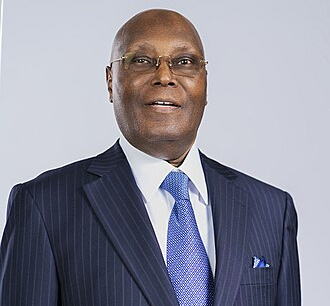
ATIKU ABUBAKAR
President - Candidate · 2027
Adamawa, Jada
Public Life
Alhaji Atiku Abubakar served as the Vice President of Nigeria from May 29, 1999, to May 29, 2007, and concurrently served as the Chairman of the National Council on Privatization (NCP) during this period. In this role, he was the driving force behind the Obasanjo administration’s economic liberalization, overseeing the sale of over 145 public enterprises, including key sectors like telecommunications, banking, and manufacturing. Facebook +3His tenure as NCP Chairman (1999-2006/2007) is characterized by significant reforms aimed at moving from a public-sector-led economy to a private-sector-led one, but it was also marked by intense controversy, allegations of cronyism, and claims of undervaluation of state assets. Punch Newspapers +4 Key Achievements and Initiatives (1999-2006)Telecommunications Revolution: Atiku spearheaded the liberalization of the telecommunications sector, leading to the introduction of GSM technology, which transformed Nigeria from less than 50,000 phone lines to millions, creating thousands of jobs.Privatization of Key Assets: He oversaw the sale or concession of numerous loss-making public enterprises, including the Aluminum Smelting Company of Nigeria (ALSCON), Daily Times, NICON Insurance, and various cement companies. Banking Sector Reform: He supported banking consolidation, which strengthened the financial sector, reducing the number of banks through recapitalization and increasing investor confidence.Economic Growth & Debt Relief: Reforms under his watch were linked to an average of 6–7% GDP growth during this period and provided the foundation for Nigeria's debt relief from the Paris Club in 2005.Institution Building: He was instrumental in establishing regulatory agencies such as the Bureau of Public Enterprises (BPE), the Due Process Unit, and supporting the creation of the Economic and Financial Crimes Commission (EFCC). Facebook +5Key Sales and Controversies The privatization program under Atiku faced intense scrutiny and was criticized for lack of transparency. Punch Newspapers +40ALSCON Sale: The Aluminum Smelting Company, reportedly built at $3.2 billion, was sold to a Russian firm (Russal) for $130 million.Daily Times of Nigeria: Sold to investors associated with powerful figures, leading to allegations of sales to cronies.Niger Dock: Its sale was criticized by the ex-MD for ignoring the Ministry of Transport and passing to a preferred bidder. Transcorp Hilton: Its sale and subsequent management also raised concerns. Facebook +3
Criticism and Legal Battles Cronyism Allegations: Critics alleged that public assets were sold at "derisory prices" to friends and business associates.2011 Senate Hearing: A 2011 Senate public hearing reported that Atiku, through a retinue of cohorts, shell companies, and fronts, managed to acquire a significant portion of the federal government’s assets under the guise of privatization. Alleged Bribery Scandal (2005): He was linked to a bribery scandal with U.S. Congressman William Jefferson, who was later convicted for receiving money to influence Atiku regarding contracts.Allegation of Diversion of Funds: Atiku was accused of diverting $145 million from the Petroleum Technology Development Fund (PTDF) to bank accounts linked to him between 1999 and 2006, allegations he denied. Facebook +3Defense of TenureAtiku has consistently defended his role in the privatization exercise, arguing that the sales were institutional, rule-based, and handled by the Bureau of Public Enterprises (BPE), not directly by him, and that the reforms were necessary to prevent waste. He maintained that the policies were sound and intended to boost private sector-led growth. Facebook +2 Source:
Campaign Manifesto
Atiku’s campaign focused on a private sector-driven economy, drawing on his experience as Vice President (1999-2007). He promised a 5-point agenda to reunite, secure, and reform Nigeria by increasing the role of private actors in infrastructure development. According to the BBC, this approach was key to his economic policy. BBC +1Additional details of his promises regarding a prosperous economy, unity, and security were discussed during his final campaign rally in February 2023, as well as in a final summary of his campaign by the PDP. SOURCE
COVENANT WITH NIGERIANS
- We shall guarantee to the Nigerian people, a progressive and focused government, with a vision and positive notion of development, aided by professionalized and result-oriented public service.
- We shall reposition the public sector to become more accountable, disciplined and performance-oriented. Service delivery shall be more efficient and effective.
- We shall build a dynamic and competitive economy. Nigeria's economic growth shall be inclusive, equitable and humane: dream economy shall create jobs for our youth.
- Economic development will be people-centred and Nigeria's new prosperity shall be for all. We shall enhance access to economic opportunities and shall consciously make the basic needs of life, including health, education, electricity, water and housing, readily available and affordable for everyone: our dream economy shall lift our people from poverty and narrow the income gaps
- We shall endeavor to achieve and maintain a balance between the rural and urban sectors of the economy and between the various federating units and geo-political zone
- We shall ensure increased public-private sector interface for the financing of joint development projects.
- We shall, through constitutional means, achieve a new political structure that guarantees freedoms and ensure government accountability at all levels. Our political reform shall reinforce the country's concept of 'true federalism' by conceding unfettered autonomy to the other two tiers of government (states and local governments);
- We shall promote the politics of inclusiveness that will reduce citizens' frustration and alienation and that way, eliminate the motivation to take up arms against the society or fellow countrymen.
- We shall restore the citizen's confidence in Nigeria as one indivisible, indissoluble, ethnically diverse but strong country that will protect and secure socio-economic benefits for all.
- We shall emphasize prevention, detection and certain, swift and severe punishment of corruption. Consequently, we shall build institutions and encourage a national culture of accountability, efficiency and transparency.
- We shall rigorously enforce judicious use of public resources, with zero tolerance for nepotism, corruption and poor management.
- We shall recognize the central place of the rule of law and ensure the supremacy of law over all persons and authorities. The Nigerian constitution will be the anchor on which the independence of the judiciary, personal liberty and democratic andother fundamental rights rest
SOURCE:https://www.google.com/search?q=THE+ATIKKU+PLAN&sourceid=chrome&ie=UTF-8&amc=1&udm=50&aep=42&cud=56&qsubts=1782141767125&source=chrome.crn.rbAtiku Abubakar's postAtiku Abubakar 21 February 2021 ·Privatisation of Refineries and Other Assets: Better Late Than Never. For decades, I have championed the privatization of our economy and full deregulation of our oil and gas sector, amongst other sectors, for greater service delivery and efficiency. As chairman of the National Council on Privatization, I advanced these policies which saw our economy achieve 6% GDP growth and created jobs for the masses of our people, and amass the national wealth that enabled us exit the debt trap, and secure our financial independence. Even though my ideas were scorned by the All Progressives Congress led Federal Government over the years, I am nevertheless most fulfilled that an administration that once failed to see the wisdom in these sound economic policies, is now facing reality and has now embraced reason, by announcing the privatization of our refineries and other assets, which have not always prospered under public management. It is always better late than never. And I commend the Federal Government for coming on board. I urge that the privatization process be as transparent as possible, as that is the only way to ensure that Nigeria reaps the greatest economic benefits from this policy. It was never about me. My interest has always been the peace, prosperity and progress of Nigeria, and I am happy to share these ideas, and others, with the government of the day, for the betterment of our nation and its people. SOURCE: https://web.facebook.com/Atiku.org/posts/privatisation-of-refineries-and-other-assets-better-late-than-never-for-decades-/10159070519284640/?_rdc=1&_rdr
Campaign Promises (12)
Focus on Governance Over "2027 Politics"
While preparing to run, Atiku has advised the current administration to stop chasing early 2027 endorsements and focus on resolving the ongoing economic hardship, high inflation, and insecurity. Facebook +7Key Strategy - The 2027 Coalition:Atiku is leading a coalition of opposition figures—including mentions of Peter Obi, SOURCE: Rabiu Kwankwaso, and others—aimed at unifying the opposition under the ADC platform. He has noted his willingness to step aside for a younger candidate only if they are widely accepted, but has also declared his intent to run if a consensus is not reached. SOURCE:
Protection of Regional Interests
Atiku has specifically pledged to protect the interests of the South-West, promising the region would be central to his policy making.
Rebuilding Nigeria and Infrastructure:
His campaign focuses on "reclamation and reconstruction" of the country, addressing insecurity, and curbing the "mega-scale" corruption.
Constitutionalizing Rotational Presidency
He has pledged to pursue a constitutional amendment to firmly establish the rotational presidency principle, arguing that zoning provides a more stable framework for power sharing.
Rescuing Nigeria from Economic
"Intensive Care": Atiku has described the 2027 election as a contest to save Nigeria from severe economic deterioration, high poverty levels, and pain.
Youth Employment
Aimed to tackle youth unemployment through economic diversification.
Education and Social Development
Education Funding: Committed to supporting both state and federal universities to prevent strikes, including setting up a fund for education.
National Unity
Promised to foster national cohesion, bridge regional divides, and run an inclusive government.
Economy and Infrastructure
Privatization: Vowed to break government monopolies by privatizing key infrastructure, including refineries, rail transport, and power transmission, to enhance efficiency and private sector involvement.
Power Generation
Promised to increase power generation to 25,000 MW, focusing on renewable and non-renewable energy sources.
Economic Reform
Pledged to eliminate the interventionist foreign exchange policy to stop price distortions.
Security and Governance
Security Reform: Promised to increase the number of security personnel, improve their welfare, and deploy modern technology for intelligence gathering.Decentralization: Pledged to restructure the country by devolving more powers and resources to states and local governments, including proposing state police.
Performance Summary
0%
Fulfillment Rate